
Goalbound
6v6 Anime Soccer · Roblox
Goalbound Wiki: Styles, Egos, Flow & Controls
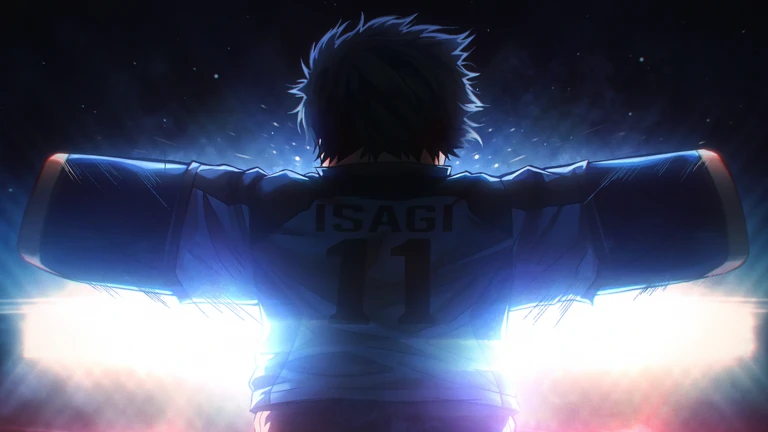
Goalbound is ΞGO's Blue Lock-inspired Roblox soccer game, and it runs four systems that coverage online routinely merges: Styles you roll for, Egos you roll for, an Ego activation on T, and a Flow State on G. This page covers the format, the developer's full control list, the pity system, and the roster.
exploreBrowse Goalbound
View All WikisGoalbound Snapshot
| Stat | Value | Source |
|---|---|---|
| Visits | 74.0M+ | Roblox games |
| Favourites | 272,096 | Roblox games |
| Server Size | 12 (6v6) | Roblox games |
| Styles / Egos | 15 / 11 | Roster |
Lore & Trivia
Overview
Goalbound is the Blue Lock-inspired Roblox soccer game from the development group ΞGO, launched in 2025 and patched as recently as October 6, 2026. Twelve players occupy a server for 6v6 matches, where duels resolve on timed inputs: a parry beats a tackle, a curve shot beats a straight one, a feint ankle-breaks a defender. Underneath sit two independent gacha pools — Styles, the character kits, and Egos, the stat modifiers — plus a Flow state charged by tackles and goals, and an Awakening move on V. The developer documents all of it, including a 50-pull pity guarantee, yet much third-party coverage calls the format 5v5, prints tackle on the wrong key, and never mentions that pity system. This page corrects all three with the authoritative control list, the official tier rate for a Style, all eleven Ego stat lines, and the exact rules for charging the Flow meter.
The developer documents this game unusually well, which is the good news and also why so much third-party coverage is wrong. There is a public developer board with a full mechanics list, an official tier table for both roll pools, a documented pity system, and an exact economy for Yen. Almost none of it appears on the Goalbound pages that rank for codes and tier lists.
If you are starting today, the Goalbound beginner guide sequences the first session around the one input that matters most — the curved shot from behind the box — before covering the duels and the spin decisions.
What a Goalbound Match Actually Is
Two teams of six, one ball, and a scoreline. What separates Goalbound from a plain Roblox football game is that duels resolve through timed inputs rather than positioning alone: a timed parry beats a tackle, a curve shot beats a straight one, and a feint can leave a defender unable to take the ball.
| Detail | Value |
|---|---|
| Developer | ΞGO (Roblox group) |
| Genre | Sports & Racing → Sports |
| Match format | 6v6, server size 12 |
| Visits | 74.0M+ |
| Favourites | 272,096 |
| Players in game | ~1,153 at the time of checking |
| Voice chat / camera | Not supported |
| Maturity | Minimal |
| Last updated | October 6, 2026 |
| Official community | ~256,970 members |
Source: Goalbound official experience page, checked October 7, 2026. The listing states "players compete in intense 6v6 team-based matches to prove they're the best striker" and reports a server size of 12, 74.0M+ visits and 272,096 favourites.
Note the absence of voice chat alongside a 12-player server. Six a side with no comms means a crowded penalty box is a decision nobody can coordinate a fix for, which is why the recorded advice on spacing matters more here than in a football game with voice.
The Control Scheme the Developer Actually Publishes
Goalbound has a genuine split-brain problem: the developer's own two official sources disagree about two keys.
The experience page description summarises the binds as "T - Flow" and "G - Awaken". The developer's mechanics board, which documents every bind individually, lists T as Ego and G as Flow State Bar. A third-party keybind dump of the game also lists G for Flow and T for Ego, which is what makes the mechanics board the better reading of the two.
Here is the full list as the mechanics board publishes it:
| Input | Action |
|---|---|
| Left Shift | Run |
| Left Shift ×2 | Super Sprint |
| Spacebar | Rainbow Flick |
| LMB (hold) | Kick / Shoot |
| LMB (in air, near ball) | Volley |
| A/D + LMB | Curve Shot |
| LMB (hold) + RMB | Feint |
| LMB (hold) + RMB (timed) | Parry |
| Spacebar + head | Basic Header |
| Spacebar + RMB | Power Header |
| Q | Dribble |
| E | Tackle |
| Spacebar + E | Intercept (ground and aerial variants) |
| R | Request Callout |
| T | Ego |
| F | Directional Dash |
| G | Flow State Bar |
| B | Emote Wheel |
| Z, X, C, V | Style Moveset |
Source: Official Goalbound developer board, "Game Mechanics" list, checked October 7, 2026. The board enumerates each bind as its own card, including "(T) Ego", "(G) Flow State Bar" and "(F) Directional Dash", while the official experience page description reads "T - Flow" and "G - Awaken".
Two details in that table are worth more than the rest. E is Tackle, not F — several control guides put tackle on F and someone copying them will spend a match dashing into people instead of tackling. And the dash is on F with only a 4-second cooldown, which makes it the cheapest movement tool in the game and the reason dash-baiting works as a defensive tactic.
Consoles get a parallel mapping: the four Style moves sit on LB, RB, X and Y, dash is on B, and the rest map to the standard gamepad layout.
Ego, Flow and Awakening Are Three Separate Triggers
This is the single biggest source of confusion in Goalbound, and the game's own description makes it worse.
- T activates your Ego. It boosts you "much more stronger/faster, depending on what type of Ego they choose", and it is also the trigger that switches on your Ego's secret passive. Every passive on the official Ego cards is conditioned on having activated your Ego, which means the passive does nothing until you press T.
- G spends your Flow State meter. The Flow State "makes them gain access to a different move and making them enter the Flow State" — that different move is the V Awakening move from your Style.
- V is the Awakening move itself, the fourth slot in your Style move set, on an 80-second cooldown across every Style in the game.
The Flow State bar fills from three specific actions and no others. The developer states it plainly: "Currently, only Ankle Breaks, Steals/Tackles, and scoring goals grants some awakening meter." Dribbling does not charge it, possession does not charge it, and time does not charge it. You earn it by taking the ball off people and scoring.
That is why Goalbound rewards aggression more than the scoreboard suggests. A defender who lands tackles all match charges Flow as fast as the striker who scores, and the meter is the same one the Awakening move draws from.
The Pity System and What It Guarantees
Goalbound has a documented pity system, and it is the most decision-relevant fact in the game that no third-party page publishes.
Reaching 50 pity guarantees an Epic or higher Style. In practical terms: you cannot spend 50 Style Spins and come away with nothing better than a Rare. The Epic tier holds Kurona and Bachira, so the pity floor is a genuinely strong outcome rather than a consolation.
Two consequences follow. First, if you are near pity, keep spinning Styles rather than switching pools — the guarantee is banked value. Second, because Epic already sits at 16% on a normal Spin, the pity system mostly protects you against an unlucky streak rather than changing your expected outcome, which is why a Lucky Spin remains the faster route to a good Epic.
Source: Official Goalbound developer board, "Pity System" card, checked October 7, 2026. The card states "reaching the 50 pity is a guarantee Epic or higher in rarity".
Styles and Egos, and Their Tiers
Both roll pools use the same six-tier ladder for Styles and five tiers for Egos, and the developer publishes the rates for each. The Styles table in full:
| Tier | Normal Spin | Lucky Spin | Styles in tier |
|---|---|---|---|
| World Class | 0.3% | 2.8% | Isagi (Neo Egoist League), Don Lorenzo |
| Mythic | 1.5% | 4.2% | Sae, Rin, Shidou, Aiku |
| Legendary | 3.2% | 21% | Barou, Nagi, Yukimiya |
| Epic | 16% | 72% | Kurona, Bachira |
| Rare | 25% | 0% | Gagamaru, Chigiri, Kunigami |
| Uncommon | 54% | 0% | Isagi (Blue Lock's Ace) |
Both columns total exactly 100%. The full move lists live on the Goalbound Styles reference, and the Ego stat lines and passives are on the Goalbound Egos reference.
The thing to notice is what Lucky Spins actually do. They do not lift you toward the top tier evenly — they delete the bottom two tiers, taking Uncommon from 54% to 0% and Rare from 25% to 0%, and pour that 79% into Epic, which jumps from 16% to 72%. A Lucky Spin is the best route to a very good Epic, not a realistic route to a Mythic.
One naming trap worth knowing before you read any tier list: Isagi appears twice. Blue Lock's Ace is the Uncommon starter kit; Neo Egoist League Isagi is the World Class 0.3%. Same name, opposite ends of the ladder, and both can be ranked correctly at once.
How You Earn Yen and Spins
Goalbound gates its rolls behind Yen and Spins, and there are three documented income routes.
Playing matches. Yen comes from ankle breaks, tackles and goals. The same actions charge your Flow meter, so a disruptive defensive game pays twice.
The AFK World. Two separate clocks run here: a guaranteed 2,000 Yen every 10 minutes, and a random reward every 20 minutes that can include Spins. The published AFK drop table leans heavily toward Style and Ego Spins over Yen, with a 1% shot at a Lucky Style Spin. You can skip the wait for 99 Robux.
The Daily Wheel, one free spin per real day. Its table is dominated by Yen — 40% for 1,000 and a further 25% for 5,000 — with a 4% chance at a Lucky Style Spin and a 6% at a Lucky Ego Spin.
Both tables are worth reading as an expectation rather than a jackpot. The Daily Wheel is mostly a small Yen drip; the AFK World is the better Spin source if you can leave a session running, and its guaranteed 2,000 Yen floor means it is never a wasted wait.
Source: Official Goalbound developer board, "How To Get Yen/Money?", "AFK World" and "Daily Wheel" cards, checked October 7, 2026. The AFK card states "For a random reward to be granted to you, you must wait 20 minutes. For a guaranteed 2,000 Yen reward, you must wait 10 minutes."
Levelling is the one system with almost no payoff. The developer states that the only real use for levels at the moment is access to Pro Servers, so XP is not a currency worth optimising for.
What Is Still Not Documented
Being precise about the gaps, since the documented half is unusually complete:
- Don Lorenzo's kit. He is placed in the World Class tier but his card still shows placeholder question marks for all four moves, so his abilities are genuinely unpublished rather than merely hard to find.
- Lucky Spin rates for Egos. The Ego list labels its Lucky column inconsistently, using the Style wording on three tiers and the Ego wording on two, so only the normal rates can be read unambiguously.
- The full Ego tier-rate set against the Style set. The two pools share a ladder by inspection, but the developer has not stated that they are the same table.
- Third-party Ego numbers. A widely copied 2025 guide prints 120% kick power for three different Egos; the official values are 107%, 107% and 105%. It also prints an identical stat line for two Egos, which is the tell that the numbers were duplicated rather than read from the game.
For how Goalbound's transparency compares with its genre neighbours, Blue Lock Farm and Ball VS Ball both run gacha systems and neither publishes odds.
FAQ
Is Goalbound 5v5 or 6v6?
6v6. The developer's experience page says "intense 6v6 team-based matches" and reports a server size of 12, which is six a side. Coverage saying 5v5 is quoting a superseded version of that description.
What does pressing T do in Goalbound?
T activates your Ego, boosting you according to your roll and switching on that Ego's secret passive. The developer's mechanics board lists T as Ego — the Flow State is on G — even though the experience page description words those two binds the other way around.
How do I charge the Flow State bar?
Only three actions count: ankle breaks, steals or tackles, and goals. The developer states that nothing else grants meter. Because tackles count the same as goals, a defensive match charges Flow as fast as a scoring one.
Is there a pity system in Goalbound?
Yes. Reaching 50 pity guarantees an Epic or higher Style, so 50 Style Spins cannot leave you with only a Rare or Uncommon.
Where is the Goalbound code box?
Behind the envelope button in the top-left icon row of the lobby, or at the code section you can walk up to. Both open the same dialog, and both require you to have joined the ΞGO community and liked the experience before anything will redeem.
Which Style should I chase?
Depends on the role. Gagamaru is the goalkeeper kit with the two cheapest skills in the game at 13 seconds each. Dribbler and Streetstyle are the Egos that make ball carrying work. And with a guaranteed Epic at 50 pity, a Lucky Spin aimed at that tier is usually a better investment than hoping for a Mythic.
Change Log
- 2026-10-07: Corrected against the developer's mechanics board. T is Ego and G is the Flow State bar, not the reverse as the experience page description implies; the dash is F with a 4-second cooldown; the 50-pull pity system and the AFK World and Daily Wheel reward tables added; Style tier rates are official rather than community-reported; the roster is fifteen Styles and eleven Egos.
- 2026-10-07: Initial publication. Establishes the 6v6 format against circulating 5v5 claims, transcribes the developer control table, and publishes the Style rate table.
Discussion
Sign in to join the discussion.