
Lurking Giants Giants Guide – Locust, Guilt & VERITY Roster
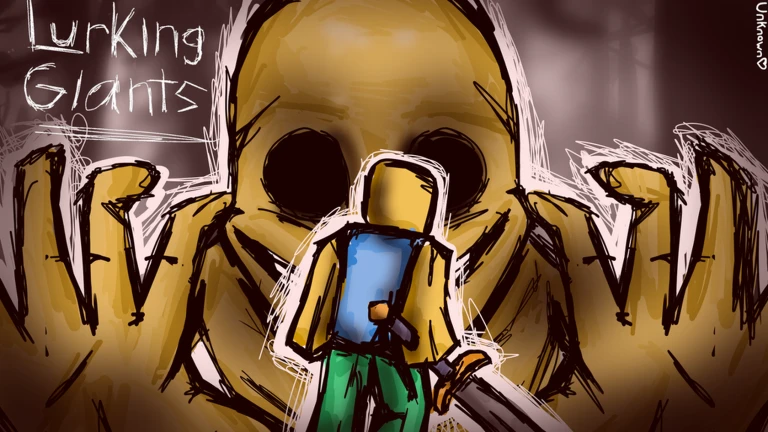
The giant roster in Lurking Giants defines how every round feels. Learn how Locust and Guilt differ, what their Q and G abilities do, how to play as the giant, and how to survive against each hunter.
Giant Roster Snapshot
| Stat | Value | Roblox games |
|---|---|---|
| Playable Giants | 2 | Lurking Giants |
| Upcoming Giants | 2 | Lurking Giants |
| Premium Unlock Cost | 7,000 Coins | Lurking Giants |
Lore & Trivia
Overview
Editorial verification on July 13, 2026 at 03:15 UTC: I checked the official Roblox game page and cross-referenced giant rosters, ability references, and gameplay guides from multiple community sources. Locust is consistently listed as the free starter giant, Guilt requires 7,000 Coins, both playable giants use Q for attack and G for Haunt, and Verity / Doctor Nowhere are marked as upcoming with no confirmed ability details.
In Lurking Giants, the giant is not just an enemy — it is a player with abilities, movement patterns, and map advantages. Whether you want to save Coins for Guilt, survive longer as a survivor, or maximize your kill count when you roll the giant role, you need to understand how each hunter works.
All Giants
| Giant | Unlock Cost | Status | Map Strength | Tier Summary |
|---|---|---|---|---|
| Locust | Free | Playable | Forest | B-tier balanced hunter |
| Guilt | 7,000 Coins | Playable | City | S-tier vertical chase pressure |
| Verity | Unknown | Upcoming | TBD | Rework flagship giant |
| Doctor Nowhere | Unknown | Teased | TBD | No confirmed details |
Locust
Locust is the default two-star giant every new player faces first. It is free, unlocked from the start, and built around a balanced chase model.
- Appearance — A black, lanky humanoid with biomechanical tubes, hollow eyes, and stick-like arms.
- Strengths — Reliable on open terrain, consistent pressure, no economy barrier for the player controlling it.
- Weaknesses — Less effective on vertical City maps where survivors can drop between rooftops and tunnels.
- Survivor counterplay — Use elevation changes on City and force Locust to take long routes around buildings. On Forest, stay out of geyser fields and rotate through tree cover after every pulse. Deep horizontal relocation of 30+ meters is the most effective counter because Locust checks nearest cover first and expands outward.
Locust is the baseline. If you can survive against Locust, you have learned the core loop.
Guilt
Guilt is the premium three-star giant and the main reason players grind Coins. It costs 7,000 Coins and changes how survivors move through the City map.
- Appearance — A taller, more imposing presence than Locust, which is reflected in its higher shop rarity.
- Strengths — Superior vertical chase pressure, dominates stair gaps and rooftop transitions on City.
- Weaknesses — On Forest, open sightlines can be less punishing than City verticality; survivors with good relocation timing can still outlast it.
- Survivor counterplay — On City, avoid dead-end rooftops and stairwells. Underground tunnels are the strongest counter because Guilt’s Haunt cannot reach through the ground. On Forest, play wider angles and use caves to break line of sight.
Guilt is worth unlocking if you enjoy the giant role, but it is not an automatic win. A coordinated group of survivors who understand relocation timing can still reach sunrise.
How to Play as Giant
Rolling the giant is the power-fantasy side of Lurking Giants. A strong giant player wins through pulse timing, chokepoint control, and punishing survivors who camp instead of relocating.
Spawn and Opening Move
Giants emerge from a television set at round start. Your first ten seconds are for positioning, not chasing. Note where survivors cluster near the campfire and gate spawns, then plan a route that intersects common relocation paths.
Pulse Hunting
The visibility pulses at 1:00, 2:00, 3:00, 4:00, and 5:00 AM are your main intel. Mark survivor positions during the pulse, predict where they will relocate, and attack during the post-pulse confusion window. Each pulse should produce at least one kill attempt if you path efficiently.
Abilities: Attack and Haunt
- Q — Attack — Your primary melee strike. Learn its range; swinging early wastes the cooldown. When survivors hear the attack sound, they know you have entered a brief cooldown and can use that window to escape.
- G — Haunt — Creates an area of static distortion that pressures survivors and cuts off escape routes. Guilt’s Haunt is especially effective on City stairwells and rooftops.
Exact cooldowns and ranges are not officially documented. Community observations suggest the attack cooldown is roughly three seconds and Guilt’s Haunt affects an area of roughly 15–20 meters, but treat these as approximate.
Map Strategy
| Map | Giant Approach |
|---|---|
| Forest | Sweep the outer ring; camp cave entrances after 3:00 AM |
| City | Avoid long tower climbs; camp ground exits and haunt stair tops |
Common Giant Mistakes
- Chasing one survivor for too long while others farm safe time.
- Ignoring the 5:00 AM final pulse — survivors who survive it almost always reach sunrise.
- Climbing City towers without planning the descent — time lost on geometry equals free survivor minutes.
Surviving Against Each Giant
Your hiding strategy should change depending on which giant is hunting.
| Factor | Against Locust | Against Guilt |
|---|---|---|
| Priority | Distance from last-known position | Stay outside Haunt range |
| Best cover | Bushes and caves that break line of sight | Tunnels and lower floors |
| Worst cover | Open terrain near geyser fields | Stairwells and isolated rooftops |
| Relocation | Deep horizontal movement | Vertical drop into tunnels |
| Audio cue | Heavy footsteps direction | Static distortion from Haunt activation |
Audio Counterplay
Sound is your earliest warning system:
- Heavy footsteps louder in one ear mean the giant is on that side. Move in the opposite direction immediately.
- Attack sound (a loud crash or bang) means the giant just used Q and is in a brief cooldown. Use that window to create distance.
- Haunt static means Guilt activated G nearby. Move away from the static source until it fades.
Upcoming Giants
The VERITY rework will add at least two new giants. What we know so far:
| Giant | Status | Known Details |
|---|---|---|
| Verity | Upcoming | Flagship giant of the VERITY rework; no confirmed abilities or cost |
| Doctor Nowhere | Teased | Mentioned in shop UI; no confirmed release details |
Until these giants appear in the live game or are officially detailed, any ability descriptions, tier placements, or cost estimates are speculation. This page will update once verified information is available.
Giant Tier Reasoning
Tier lists for Lurking Giants depend heavily on which map is being played. A single flat ranking misses the point.
| Giant | City Performance | Forest Performance | Overall Tier |
|---|---|---|---|
| Guilt | S-tier — vertical chase dominance | A-tier — strong but less map-specific | S-tier |
| Locust | B-tier — loses some pressure to verticality | B-tier — solid open-terrain pursuit | B-tier |
Why Guilt ranks higher: City is a popular voted map, and Guilt’s ability to punish rooftop mistakes and stair gaps gives it more kill opportunities per round. Why Locust stays balanced: It performs consistently on both maps without a clear weak mode, making it a reliable starter choice.
Giant-Map Matchups
Your vote and your survival strategy should change based on which giant is hunting.
| Giant | Best Map | Survivor Strategy |
|---|---|---|
| Locust | Forest | Use caves and tree clusters; avoid open geyser fields |
| Guilt | City | Avoid rooftops and stair gaps; stay on lower floors with multiple exits |
If you are playing as the giant, pick the map that amplifies your strengths. If you are a survivor, vote for the map that weakens whichever giant the lobby rolls.
How to Unlock Guilt Faster
At an average of 100-200 Coins per survived round, unlocking Guilt takes roughly 35-70 rounds of consistent survivor play. Giants earn 25 Coins per kill plus performance bonuses, so a four-kill round outpaces survivor income. Chain kills during the 2:00–4:00 AM window when relocation mistakes peak. The active code SORRYFORDELAY gives a free 200-Coin head start. See the Lurking Giants codes page for redemption details.
Frequently Asked Questions
Is Guilt pay-to-win? No. Guilt costs in-game Coins earned through play, not Robux directly. It is stronger in most situations, but skilled survivors can still beat it.
Can I play as the giant every round? No. Giant selection is random each round. The 2x Giant Chance game pass doubles your odds.
What do Q and G do for giants? Q is the primary attack. G is Haunt, an area-pressure ability that creates a static distortion effect. Exact cooldowns and ranges are community-estimated, not official.
Should I buy Guilt or save for future giants? If you enjoy the giant role now, Guilt is the best current investment. If you prefer to wait, the VERITY rework may shift the meta when Verity launches.
How do I know if Guilt used Haunt? You will hear a static distortion effect similar to TV interference. Move away from the sound source until it fades.
What is the best way to train against giants? Play with headphones. Learn to distinguish heavy giant footsteps from lighter survivor movement, and practice relocating immediately after each pulse without waiting for visual contact.
Change Log
- 2026-07-13: Expanded page with giant abilities (Q attack / G Haunt), giant gameplay strategy, survivor counterplay, and audio cue responses. Verified Locust as free starter, Guilt at 7,000 Coins, and Verity/Doctor Nowhere as upcoming.
Discussion
Sign in to join the discussion.