
Ball VS Ball Balls & Abilities Reference
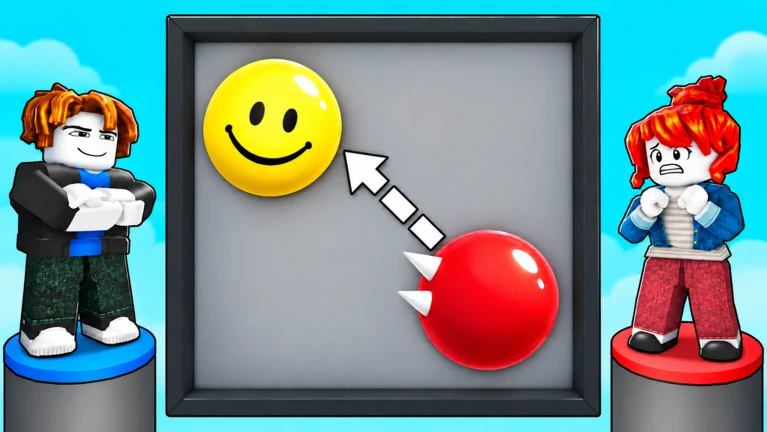
Every ball in Ball VS Ball fights differently, and the crate a ball comes from tells you more about its role than the rarity labels circulating online.
Ball Reference Status
| Stat | Value | Reference |
|---|---|---|
| Named Balls Documented | 33 | Roblox games |
| Roster Count Published by Developer | None | Roblox games |
| Official Rarity Table | Not published | Roblox games |
| Crate Families | 3 plus special unlocks | Roblox games |
Lore & Trivia
Overview
Balls are the entire game in Ball VS Ball. The crate a ball arrives from shapes what it does to enemies, and the ability it carries decides how much damage a round produces once the physics simulation takes over. Two players with equal skill but different collections are not playing the same match, which is why an accurate ball reference matters more here than a list of names.
This reference covers what each documented ball does, which crate family it belongs to, and — just as importantly — which widely repeated claims about balls do not survive checking. The developer publishes no stat sheet, no roster count, and no rarity table, so a reference page that presents tidy numbers is inventing them.
Verified by RoboLibrary Editorial on September 27, 2026: Ball names, abilities, and crate families were cross-checked against independent written coverage and against recorded walkthroughs of the August and September 2026 builds. Damage figures read from footage are marked approximate, because the developer publishes none. Where sources contradict each other on a ball's strength, the contradiction is reported instead of resolved by preference.
How Many Balls Exist
The honest answer is that nobody outside the developer knows precisely, because the roster grows with updates and no official count exists.
A dated community count published in September 2026 put the roster at 33 named balls, with 30 obtainable through the crate system and three arriving through special routes such as a login bonus or a premium pack. A community wiki category independently converged on the same order of magnitude, which is the strongest agreement available — but it is still community-maintained and still a snapshot.
Two caveats matter when reading that number. First, the roster keeps expanding: at least one additional ball arrived with the September 19, 2026 update, after the count was published, and a premium ball was added around September 22. Second, the count describes named balls people have documented, not every ball in the game. Treat 33 as "at least this many, as of mid-September 2026."
Ball Reference by Crate
Balls come from crate families, and the crate a ball belongs to is a verifiable fact in a way that its rarity tier is not. The following grouping reflects where balls have been documented as coming from.
| Ball | What It Does | Source |
|---|---|---|
| Charge Ball | Waits longer between hits and lands harder because of it | Basic crate |
| Glass Ball | Each impact scatters glass shards that deal damage | Basic crate |
| Axe Ball | A spinning axe strikes enemies and spins faster as your health drops | Basic crate |
| Poison Spike Ball | Leaves wall spikes that damage and poison anything touching them | Basic crate |
| Blade Ball | Blades orbit the ball, with more appearing over time | Basic crate |
| Machine Gun Ball | Fires at the nearest enemy | Basic crate |
| Spider Ball | Webs form where the ball strikes walls and damage anything touching them | Basic crate |
| Vampire Ball | Attaches to the enemy and drains health while restoring yours | Basic crate |
| Thief Ball | Throws knives at the nearest enemy, faster as your health drops | Basic crate |
| Burst Ball | Dashing makes its hits considerably stronger | Basic crate |
| Chess Ball | Advances along chess-piece paths, introducing a random element | Advanced crate 1 |
| Dice Ball | Drops numbered dice that deal damage matching the roll | Advanced crate 1 |
| Laser Ball | Wall hits leave a laser that damages anything crossing it | Advanced crate 1 |
| Snake Ball | Grows a tail over time that damages and knocks enemies back | Advanced crate 1 |
| Hook Ball | Hooks an enemy and spins it out of control | Advanced crate 1 |
| Cell Ball | Grows larger, then splits into smaller balls when destroyed | Advanced crate 1 |
| Electric Ball | Contact shocks an enemy and freezes it in place | Advanced crate 1 |
| Zone Ball | Creates a damaging zone that hurts enemies inside it | Advanced crate 1 |
| Ice Cone Ball | Bombs burst into icy spikes that damage nearby enemies | Advanced crate 1 |
| Reforge Ball | Wall hits summon a helper that grows stronger with each hit | Advanced crate 1 |
| Beam Ball | Charges and fires a tracking beam | Advanced crate 2 |
| Apple Ball | Throws apples that heal you and damage enemies | Advanced crate 2 |
| Cannon Ball | Wall hits spawn turrets that fire at enemies | Advanced crate 2 |
| Virus Ball | Poisons enemies that touch it | Advanced crate 2 |
| WDC | Summons a grid whose damage matches the cell number it lands on | Advanced crate 2 |
| Big Spike Ball | Wall spikes damage enemies | Advanced crate 2 |
| Bow Ball | Charges and fires bouncing arrows | Advanced crate 2 |
| Electro King | Wall hits create an electric grid that shocks enemies | Advanced crate 2 |
| Range Ball | An expanding field damages nearby enemies | Advanced crate 2 |
| Frost Ball | Leaves frost that freezes and damages enemies | Advanced crate 2 |
| Bomb Ball | Drops bombs that damage and knock enemies back | Login bonus |
| Potion Ball | Throws random potions that leave effect zones | Special unlock |
| Conductor Ball | Lays a track on a wall hit, then a train rams enemies aside | Starter pack |
A few observations beyond the table are worth carrying into a match.
Aim placement is the ability's real skill ceiling. The Poison Spike Ball is the clearest example: its spikes are best aimed into the wall behind your opponent so they spread across the area the ball will bounce through, rather than straight at the opposing ball. The same logic applies to every ball that leaves something behind on impact — Laser Ball, Spider Ball, Cannon Ball, and Electro King all reward aiming at terrain instead of at the target.
Ability downtime is a genuine weakness. Thief Ball and Axe Ball both accelerate as their owner's health drops, which makes them strong in a losing round and unremarkable in a winning one. A ball that rewards being nearly dead is not a good pick for closing out a match.
Splitting and growth abilities play a different game. Cell Ball and Snake Ball both scale with round length, so they benefit from drawn-out fights and suffer against fast, high-burst opponents.
Ability Claims That Do Not Hold Up
Three claims circulate widely about this game and none of them survives comparison across sources. They are documented here because acting on them costs real Coins.
Damage numbers presented as statistics. Values such as "40 damage per hit" or "53 on a standout ball" appear in coverage, but they come from single recorded sessions against different opponents, not from anything the developer published. Orb health pools, hit values, and cooldowns vary by matchup and by patch. Where this reference or the main wiki mentions a figure, it is marked approximate and attributed to observed footage. Any table of exact per-ball damage is a snapshot at best.
Rarity tiers that were never assigned. Claims that balls are split into Rare, Epic, and Legendary bands appear on multiple pages, and one page even pairs a tier label with a single named ball. No source maps the roster to tiers, and the official listing publishes no rarity information at all. This reference therefore groups balls by crate family and leaves rarity out rather than guessing. The stats panel above records the absence explicitly.
Power rankings that contradict each other. Recorded coverage of the same build disagrees sharply on individual balls. One popular ball was described as both "overpowered" and "terrible" in walkthroughs published within days of each other, and another was called weak in an early September video while later videos cite high damage figures from it — most likely because the ball was strengthened in a patch. Because the developer publishes no patch notes with balance values, there is no way to settle these disputes from data. Any tier list for this game is someone's opinion about a specific build.
Rerolls, Offers and Progression
The ball economy has one rule that governs everything else: each round offers three balls drawn at random from the balls you already own. Your collection is therefore not a scoreboard, it is the size of your decision space. Owning six balls does not make you six times stronger, but it makes it far more likely that one of your three offers answers what your opponent brought.
That single rule has three consequences worth acting on.
- Buy breadth before depth. Because there is no upgrading, no levelling, and no way to strengthen an individual ball, the only lever you control is how many balls the offer can draw from. New balls widen your options; cosmetics do not.
- Rerolling changes the offer, not your collection. Rerolls are paid for with Gems, the Robux currency. They cannot introduce a ball you do not own, so rerolling is only useful when your existing pool already contains a better answer.
- Claim the free routes first. Completing your first battle — win or lose — awards a ball crate, joining the developer group and liking the game grant further rewards as stated on the official page, and the five working codes are worth 500 Coins toward crates.
FAQ
How many balls are in Ball VS Ball?
A dated community count put the roster at 33 named balls in September 2026, split between the crate families and a small number of special unlocks. The developer publishes no roster count, so treat 33 as a snapshot rather than a fixed total, and expect it to rise with updates.
Are balls organised into rarity tiers?
Not in any verifiable way. Community pages assert Rare, Epic, and Legendary bands, but none maps an individual ball to a tier, and the official listing publishes no rarity table. This reference groups balls by crate instead, which can be checked.
What does the reroll do in Ball VS Ball?
Each round offers three balls drawn at random from the balls you own. Rerolling replaces that offer, and it is paid for with Gems, the Robux-purchased currency. It does not change which balls you own.
Do you control your ball after locking your aim?
No. Ball choice and the single aim lock are the only inputs. Once both players commit, the balls collide on their own and each ability fires automatically, so aim placement matters more than reflexes. There is no reactive or timing-based input in this game.
Which ball should a new player use?
Any ball that teaches you how aim interacts with its ability. The Poison Spike Ball is a common early pick because its spikes reward aiming into the wall behind your opponent rather than directly at their ball.
Can you get balls without spending Robux?
Yes. Coins are earned from matches and open ball crates, and the first completed battle awards a free crate. Robux accelerates collection but is not required to expand your roster.
Change Log
- 2026-09-27: Initial ball reference published; 33 documented balls grouped by crate family; flagged the unassigned rarity tiers, the approximate-only damage figures, and the contradictory power claims in circulation.
Discussion
Sign in to join the discussion.