
Kabuki
Yakuza Street Roleplay • Roblox
Kabuki Wiki
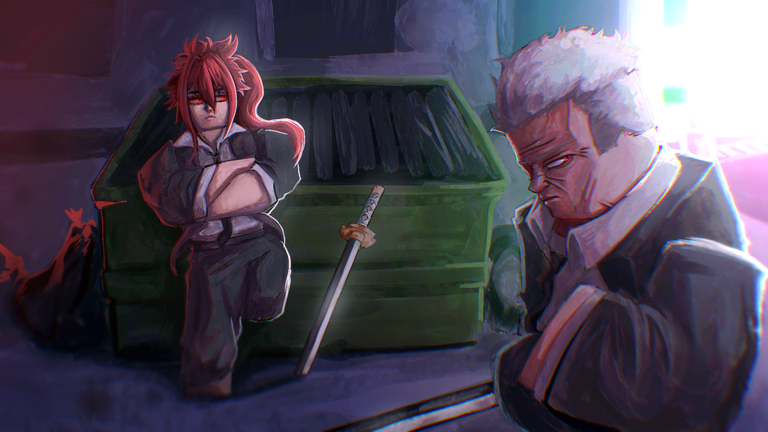
Kabuki is a Roblox yakuza street roleplay built inside a modified 1988 Kabukicho, Shinjuku. This wiki covers the working codes, the roll economy you spend on fighting styles and appearance, gang wars, and how the bracketed tag in the game title tracks each patch. Every figure here is dated, and any value only one source reports is flagged as such.
exploreBrowse Kabuki
View All WikisLore & Trivia
Overview
Source: Kabuki official Roblox experience page, listing last updated October 10, 2026. Official description: "A yakuza street roleplay game. Experience a modified 1988 Kabukicho, Shinjuku - sing karaoke, go clubbing, eat ramen or fight others on the street." Official figures, the working codes, and every roll value quoted on this wiki were read from that same listing on October 10, 2026.
Kabuki is not a battlegrounds game with a roleplay skin on top, and it is not a pure social hangout either. It is a 50-player district where the same character who rolls a fighting style at creation can spend the next hour singing karaoke and then get pulled into a street fight on the way out. Spending a roll on a style commits you to a melee identity, and the loot tables behind those styles are the part most players want documented first. The official listing reported 745.3K+ visits, 18,036 favorites, and 2,820 players active when checked on October 10, 2026, with the game last updated the same day.
That number matters more than it looks. Kabuki sits well below the visit counts of its genre neighbours, which means the district is small enough that reputation travels and large enough that you will rarely be alone in a server.
What Is Kabuki on Roblox?
Kabuki is a yakuza street roleplay experience developed by the Roblox group Oicho Kabu. The map is a stylized rebuild of Kabukicho, Shinjuku's entertainment district, frozen in 1988 at the height of Japan's bubble economy. The official listing files it under Action → Battlegrounds & Fighting with a Minimal maturity rating for light, unrealistic blood and occasional mild violence.
Three design choices separate it from the usual anime fighting experience:
- The roll happens at creation, not at a gacha banner. Your starting character is generated with a fighting style attached, so your first minutes in the district already commit you to a melee identity.
- Combat is spatial and social. Because fights break out in shared streets rather than instanced arenas, bystanders and gangmates are part of almost every encounter.
- Progress is horizontal. Styles, outfits, and appearances are separate roll targets rather than a single power ladder, so a character with a plain style but a strong look is a legitimate build.
The Roll Economy Behind Kabuki Fighting Styles
Everything in Kabuki runs on rolls. Codes hand them out, and rolls feed two separate buckets:
| Roll target | What it changes | Notes |
|---|---|---|
| Fighting style | Your melee identity in street fights | The higher-value target for most players |
| Appearance | Face, hair, hair colour, outfits | Also feeds the 1980s delinquent aesthetic |
The important detail is what happens when you reroll a fighting style. Recorded walkthroughs of the customization screen published August 31, 2026 show that rerolling for a new style keeps every item you obtained from your previous rolls rather than clearing them out. Treat this as community-recorded behaviour rather than a published rule, but it changes the recommended approach: rerolling is a collection process, not a gamble you have to hedge.
Two practical consequences follow. First, spending rolls early is safer than it looks — you are widening your collection, not discarding it. Second, appearance and style share the same currency, so a player who dumps every code reward into appearances can still be left without a style they enjoy.
For the current list of codes and their roll values, see the Kabuki codes page.
How the [24H] Title Tag Tracks Kabuki Patches
The default Roblox search entry for this game does not read simply "Kabuki." It reads Kabuki [24H], and that bracketed tag is the fastest patch-tracking signal the developers publish.
Earlier tags have included [JOBS] and [COMBATFIX], and two currently active codes carry those same names. The pattern is consistent enough to rely on: when the bracket changes, a patch has landed, and the tag usually names its theme.
| Tag observed | What it signals | Where it was seen |
|---|---|---|
[24H] | Live tag when this page was checked | Official listing, October 10, 2026 |
[JOBS] | A civilian jobs update | Third-party listings and the JOBS code name |
[COMBATFIX] | A combat-focused patch | Third-party listings and the COMBATFIX code name |
Because no official patch-notes page exists, the title tag plus the code rotation is the only reliable way to tell what changed. The live GANG WARS event on October 10, 2026 is the most recent content push, and the four current codes form the batch that shipped ahead of it.
Karaoke, Gangs, and Everything Else in 1988 Kabukicho
Combat is only one of the verbs available to you. The official description names karaoke, clubbing, and ramen directly, and all three exist as map features rather than menu options:
- Karaoke bars — performance spaces that give roleplay-focused characters something to do besides fight.
- Nightclubs — the main player-gathering venues, and where gangs tend to congregate between fights.
- Ramen shops — low-stakes social spaces scattered at street level.
- Street brawls — open-world melee against other players, with no arena or queue.
Gangs are the connective tissue. The official listing carried an event entry titled GANG WARS scheduled for October 10, 2026, confirming that organised group conflict is a live system rather than a rumoured feature. What has not been published anywhere, officially or by the community, is how you form a gang, how membership works, or how a war is scored — so treat gang mechanics as an open question rather than something to plan around.
Where the Official Kabuki Listing Sits in the Genre
Kabuki belongs to a cluster of Japanese street-fighting roleplay games on Roblox, and two of them already have full wikis here: Gakuran and Shigaku. The difference is where the tension comes from. Gakuran puts its players in a high-school setting and leans on a skill-based parry duel; Kabuki puts them in an adult nightlife district where the fight is one option among several.
Kabuki's honest gap is documentation. Its combat system is the least documented part of the game: no public source, official or otherwise, lists attack, block, or dash bindings beyond the H key that opens the character menu. If you are coming from Gakuran expecting a published list of styles and parry timings, that data simply does not exist for Kabuki yet.
FAQ
Do I need to reroll my fighting style immediately?
No. Because rerolls retain what you already collected, there is no urgency to lock in a style before you understand the combat system. Claim the available codes first, then reroll once you know what playstyle you want to build around.
What do Kabuki codes actually give me?
Rolls — the same resource used to reroll appearance options and fighting styles. The current codes grant between 25 and 50 rolls each. Exact values and status are listed on the Kabuki codes page.
Why does the game name keep changing?
The bracketed part of the title is the developers' patch marker. When a new update ships, the tag changes to name it — [JOBS] for the jobs update, [COMBATFIX] for the combat patch. The word "Kabuki" itself never changes.
Is Kabuki pay-to-win?
There is no evidence of purchasable power. Rolls are handed out through codes and gameplay, and the roll targets are a fighting style and cosmetic appearance rather than a stat ladder. The developers have not published a monetisation breakdown.
Can I play Kabuki without fighting?
Yes. Karaoke, clubs, and ramen shops exist as first-class map features, and the district supports a purely social character. That said, street fights happen in shared space, so avoiding combat entirely takes some map awareness.
Change Log
- 2026-10-10: Initial publication of the Kabuki wiki homepage with official listing statistics, the roll economy, the title-tag patch system, gang wars, and genre positioning.
Related Pages
- Kabuki Codes — Working codes, roll values, and the redeem path.
- Gakuran Wiki — The closest genre sibling, with a fully documented combat system.
- Shigaku Wiki — Another Japanese school-fighting roleplay experience.
Discussion
Sign in to join the discussion.