
First Person Boxing
First-Person Boxing PvP • Roblox
First Person Boxing Wiki: Controls, Styles & Spins
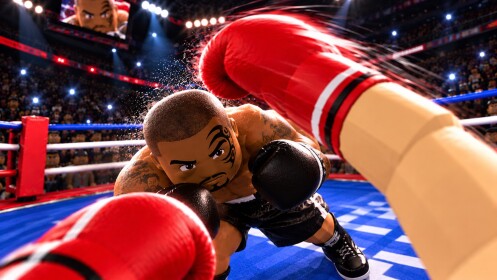
First Person Boxing puts the camera inside your own guard, so exchanges are decided by blocking discipline, slip timing, and a stamina bar you have to read off your opponent rather than off a number.
exploreBrowse First Person Boxing
View All WikisLive Snapshot
| Stat | Value | Reference |
|---|---|---|
| Concurrent Players | 5,940 | Roblox games |
| Total Visits | 993,638 | Roblox games |
| Favorites | 8,018 | Roblox games |
| Upvotes / Downvotes | 13,763 / 992 (93.3% positive) | Roblox votes |
| Server Size | 16 players | Roblox games |
| Created At | 2026-09-28 | Roblox games |
Lore & Trivia
What First Person Boxing Is
First Person Boxing hides the third-person camera, so a fighter sees a jab arriving and a sweat sheen building and very little else. The group Can You Box? launched this Roblox fighting game on 28 September 2026; by 17 October 2026 it held 5,940 concurrent players, 993,638 visits and a 93.3% positive vote share across 14,755 votes. Bouts run one fighter against one, sixteen to a server, with AI sparring offered as an alternative to queueing.
The official description is unusually explicit about which systems exist, which makes it the cleanest place to start separating what the game has from what community pages invent. It names slipping punches, head and body guards, counters, stamina that slows a tired fighter down, cinematic knockdowns and replays, player-versus-player and AI practice, and PC, mobile and console support.
Source: First Person Boxing on Roblox, official experience page, listing last updated 17 October 2026. Official text: "Slip punches, counter & outsmart your opponent / Use different guards to protect your head & body / Land devastating counters for huge knockouts / Manage your stamina — getting tired slows you down".
That list is the whole advertised rule set. Everything else on this page comes from recorded play of the October 2026 build or from platform data, and where a detail rests on a single recording it is labelled as such.
Live Stats Snapshot
| Metric | Value |
|---|---|
| Concurrent players | 5,940 |
| Total visits | 993,638 |
| Favorites | 8,018 |
| Votes | 13,763 up / 992 down (93.3% positive) |
| Server size | 16 players |
| Created | 28 September 2026 |
| Last updated | 17 October 2026 |
The 93.3% positive vote share on that many votes is the part worth noticing. A game that has gone from a few hundred players to several thousand inside three weeks usually carries a bruised rating from launch-day matchmaking and unfinished systems; this one has not. The growth itself is recent: search interest in the game and in its codes was flat through early October 2026 and then rose steeply from 13 October, which is also when recorded coverage of the game begins.
The Round Loop
Recorded matches of the October build show the loop plainly: you queue from the lobby, the game drops you into a ring against one other fighter, and the match resolves in rounds separated by a knockdown replay. Two details inside that loop matter far more than they look.
Health comes back. Footage of a live match shows a fighter break off, back away and visibly regenerate while the opponent hesitates; the player recording tells viewers immediately not to let it happen. Disengaging is therefore a real option rather than a concession, and a round can swing back after one fighter has already been badly hurt. A player who wins an exchange and keeps holding forward is giving that regeneration away.
The knockdown replay is optional. It is advertised as a feature and it can be switched off in the settings menu. Recorded players turn it off because the cut interrupts the pace of a grind. That is a preference rather than a rule, but it is the reason the setting shows up in every walkthrough.
You can also watch other players fight before you queue. Recorded footage shows a spectator view of a full match, and it is the cheapest way to learn what a losing exchange looks like from outside before you are inside one.
Control Scheme
Two independent recordings of the October 2026 build agree on the defensive bindings. The remainder come from single sessions, so treat those as the community-recorded default and confirm them in the controls overlay, which the game opens with H and which is also shown during the tutorial.
| Action | Input | Recorded in |
|---|---|---|
| Hold guard (head and body) | F | Both recordings |
| Weave out of a punch | Spacebar | Both recordings |
| Open the controls overlay | H | Recording + written coverage |
| Open character customization | K | Both recordings |
| Lock on to your opponent | Q | One recording |
| Footwork | W and D | One recording |
| Left and right jab | Left and right mouse button | One recording |
| Hook and dodge | E and R | One recording |
| Join a fight from the lobby | J | One recording |
| Open the in-game Shop | B, or the Shop button | Redemption footage |
| Toggle gloves | G | One recording |
| Sensitivity, FOV, knockdown replays | Left Alt settings menu | One recording |
The pattern the recordings converge on is lopsided: guard is held almost permanently and released only to throw. Both players describe leaving the guard down as the single most common way to lose an exchange, and one of them notes that a permanently blocking opponent is simply unpleasant to fight. Weave is the tool you reach for when a punch is already committed, not a movement key.
Fighting Styles and Spin Rarity
Styles are the progression system. You spend Spins to roll one, and the roll decides your defensive stance and hit profile rather than a cosmetic skin. Recorded footage of a roll shows Philly Shell coming up, described as a shoulder-rolled defensive stance; a single written round-up also names Rope-a-Dope, Slick and Peekaboo, which this wiki has not independently confirmed and therefore does not treat as a roster.
Rarity runs from common tiers up through Legendary and Mythic, and both recorded players treat those two bands as the point of rolling at all. What no source can give you is a drop rate: the developer publishes none, every community number that exists is somebody's sample from their own rolls, and a sample from one account is not a rate. Any page quoting a percentage for a Mythic style is quoting an unlabelled sample.
Two things follow for spending. Spins come from coins, coins come from winning, so rolling is gated behind winning fights with whatever style you already have. And because the style pool is not published in full, chasing a specific named style is guesswork; rolling for a rarity band is the only decision the game actually exposes.
Stamina and the Sweat Tell
Stamina is the system the official description admits to and never quantifies: fatigue slows you down. The cost lands on your movement and your ability to keep the guard up, which means a tired fighter is not just weaker, they are easier to hit.
The game gives that state a visual tell. When a fighter is nearly out of gas and close to being knocked out, they begin to visibly sweat. Two independent recordings show the same cue, and both players read it the same way: sweat means press, because the opponent is about to be finished. It is the single most useful piece of information in a match, and it arrives unlabelled.
Reading it in reverse is where stamina discipline pays. You cannot see your own sweat meter without looking away from the person punching you, so the safe approach is to assume you are closer to empty than you feel. That is also why backing off is not cowardice — a fighter who disengages while the opponent is fresh regenerates health and returns to the exchange with a working guard, while one who trades on empty stamina loses the guard entirely.
Coins and Fighter Customization
Coins are earned by winning matches. They convert into Spins, and Spins convert into styles, so every mechanical upgrade in the game runs through winning fights — there is no separate progression track.
Character customization opens with K and exposes body type, face and build. Recorded footage shows body type and face being changed directly, and separately shows height or weight handled as a paid roll rather than a free choice; one written round-up puts that roll at 750 coins per attempt, which is a single-source figure from one session and should be treated as a sample rather than a price list. A taller build is generally described as reaching further and a shorter one as needing to close distance, which is a reasonable inference from how reach works in a first-person fighter rather than a documented stat.
Spending order is not ambiguous if you care about winning. Styles change how fights resolve; body and face do not. Roll a style band first and treat the paid build roll as a late purchase, because a reroll of your fighter's height is a reroll of a spacing variable you have not learned to use yet.
How the First-Person Camera Changes Fights
The camera is the actual mechanic here, and it changes three things that third-person boxing games on Roblox let you ignore.
You cannot see your own feet. Distance has to be judged from how large the opponent appears, not from where your character is standing. That makes deliberate footwork the only reliable spacing tool, which is why W and D appear as a distinct binding rather than being folded into movement.
Looking around is the same input as turning away. Checking your own position means taking your eyes off the incoming punch, and in a first-person guard the opponent occupies most of the screen. The recordings all converge on keeping the opponent centred and letting the guard absorb what you cannot dodge.
Field of view is a competitive setting. Recorded players set FOV to 100 to widen peripheral vision and stop punches arriving from outside the frame, and they treat look sensitivity the same way. The settings menu also exposes knockdown replays, which is where you turn them off.
On mobile and console the same camera applies with different inputs, so the bindings above do not transfer; the FOV and sensitivity advice does.
Where First Person Boxing Coverage Is Thin
This game attracted a lot of confident coverage within three weeks of launching, and several of the disagreements are worth knowing before you trust a number.
Two community wikis state that the game has no codes. It does. A dated code listing from 15 October 2026 names two working strings, one granting a Lucky Spin and one granting three Spins, entered through the in-game Shop, and two separate recorded walkthroughs redeem a code on camera. Both wikis appear to be generic templates published without ever opening the game, and one of them also carries a fabricated "October 2026 combat overhaul" patch log with no matching developer announcement anywhere. The details are on the codes page.
The stat mirrors disagree with each other and with Roblox. Three trackers reported 1,198, 1,646 and 2,596 concurrent players for this game on the same day the official platform interfaces reported 5,940, and one of them credits the game to a different developer entirely. The visit counts diverge even further, from roughly 442,000 to 885,000 against an official 993,638.
The "3 piece combo" phrase circulates without a definition. A clip title and several pages use it, but no source states which three inputs make it up, and the recorded matches show jabs and counters rather than a named three-hit string. It is not published here as a mechanic because nothing verifies one.
FAQ
Is First Person Boxing free to play?
Yes. The experience costs nothing to join and is listed on Roblox without a price. It sells optional items for Robux, and Spins, which roll fighting styles, can be bought with either earned coins or Robux.
Which key do you hold to block in First Person Boxing?
F. Two independent recorded walkthroughs of the October 2026 build both use F as the guard key and hold it almost continuously during exchanges. The in-game controls overlay, opened with H, lists the full binding set.
Does First Person Boxing have codes?
Reported codes exist and have been redeemed on camera. Two strings were circulating on 15 October 2026, one granting a Lucky Spin and one granting three Spins, entered through the in-game Shop. Several community wikis still state that no codes exist, which contradicts both the listing and the recorded redemptions.
How many players are in a First Person Boxing match?
Matches are one fighter against one fighter. Servers hold up to 16 players, so that figure describes how many people share a lobby, not how many are in the ring. You can also queue against AI opponents or spectate other players' matches.
What happens when a fighter starts sweating?
Sweat is the visible tell that a fighter is nearly out of gas and close to being knocked out. Two independent recordings show the same cue, and the practical response is to press the attack before the opponent can disengage and let their health regenerate.
Can you play First Person Boxing on mobile or console?
Yes. The official description lists PC, mobile and console. The camera stays first-person on every device, so the settings menu FOV slider and a comfortable look sensitivity matter more than the hardware, and the recorded bindings above are PC keyboard inputs.
How do you get new fighting styles?
By spending Spins. Styles are rolled from a rarity pool that runs from common tiers up to Legendary and Mythic, and coins earned by winning matches convert into Spins. The developer does not publish drop rates, so no source can honestly quote a percentage.
Change Log
- 2026-10-17: Initial hub published; recorded the official platform snapshot, the two-recording PC control scheme, the sweat and stamina tell, and the mirror and community-wiki discrepancies.
Discussion
Sign in to join the discussion.