
Candy Kingdom Defense Units
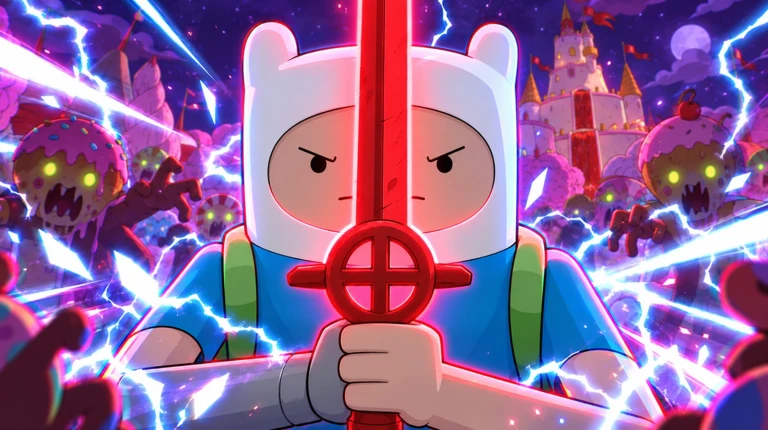
Candy Kingdom Defense units all run the same four-stage upgrade ladder inside a match, and knowing what stage four turns each hero into matters more than knowing its rarity. This page maps that ladder hero by hero, sets out what the Treasure Hoard tiers mean, explains why two Alien Jakes can hold a lane on their own, and marks which damage numbers were printed by anyone and which were read off recorded footage.
Roster Snapshot
| Stat | Value | Last Checked |
|---|---|---|
| Equipped Team Size | 6 | October 21, 2026 |
| Upgrade Stages Per Hero | 4 | October 21, 2026 |
| Confirmed Evolutions | 4 | October 21, 2026 |
Lore & Trivia
Six Slots, One Ladder, Four Roles
Candy Kingdom Defense units look like a gacha roster and behave like a ladder. Every hero you place runs the same four-stage upgrade sequence inside a match — base attack, first ability, the upgraded form of that ability, then an ultimate — and stage four is what assigns the actual job: area clear, lane control, or deleting a single boss. Jake becomes a pull controller, Marceline becomes the single-target damage dealer, and damage figures stop being comparable the moment two heroes cover different roles. Rarity decides how a hero arrives at the Treasure Hoard. The ladder decides whether it earns the in-match currency once it is standing on the lane.
That distinction is missing from most coverage of this game, which sorts heroes by rarity and stops there. Rarity in this build is a summon-pool label, not a power tier: a Mythic that lands in an area-clear role is worse on a single boss lane than a Legendary that turns into a single-target killer, and you cannot tell which is which without knowing what stage four does.
What Each Summon Tier Actually Means
Heroes come from the Treasure Hoard, the banner chest in the Tree Fort, and summons spend gems — the currency the codes page tracks. Reported members of each tier:
| Tier | Reported members | What it tells you |
|---|---|---|
| Epic | BMO, Lady Rainicorn | Cheap early bodies with workable area coverage once upgraded |
| Legendary | Marceline | The reliable route into single-target damage through its evolved form |
| Mythic | Billy, Princess Bubblegum, Lemongrab | Headline banner pulls; role varies enormously between them |
| Secret | The Lich | Rarest pull, and the two circulating drop figures do not agree |
Two caveats belong here rather than buried. The roster is weeks old, so tier membership reflects the launch pool and will drift with each banner. And the Secret-tier drop rate circulates as both 0.05% and 5% — two orders of magnitude apart, neither from the developer. Do not plan a Secret chase around either figure.
Duplicate pulls are not wasted. Spare heroes feed the hero you are levelling, and the bag fills faster than most players expect, which is why the first Robux purchase most players consider is extra storage.
The Four-Stage Ladder, Hero by Hero
The ladder is fixed per hero, not a branching skill tree, so there is no build decision inside a match beyond how far you push a given placed hero.
| Hero | Stage 1 | Stage 2 | Stage 3 | Stage 4 (ultimate) |
|---|---|---|---|---|
| Jake | Single punch | Hammer Slam, small AoE | Hammer Slam Plus, extra spin | Stretchy Tornado, full area |
| Finn | Slash | Leap and chop | Somersault Chop | Meteor Strike |
| BMO | Single hit | Short-range combo | Controller combo | Guardians of Sunshine, full area |
| Marceline | Single hit | Forward dash AoE | Crimson path rings | Rings that travel the lane and cannot miss |
Jake and Finn are the best-supported rows: two independent sources name the same abilities in the same order. BMO and Marceline come from a single full-roster showcase recording, so treat their stage names as recorded rather than settled — the behaviour is right, the labels may shift.
Late upgrades are expensive relative to early ones. A recorded session buying stage five and saving for stage six spent roughly 800 of the in-match currency on a single tier, with the same hero at six total tiers by the end of the run. The consequence for team building is that three shallow heroes spend similar currency for far less lane coverage.
Alien Jake and the Pull That Stops a Lane
Evolving Jake with sandwich materials produces Alien Jake, and its ultimate changes the lane rather than the damage number: the hero grows, opens a black hole, drags enemies inward and holds them. Recorded behaviour puts that hold at close to a minute, and two Alien Jakes placed on the same lane stack into near-permanent lockdown.
That is the single strongest defensive mechanic observed in the build, and it is a positional interaction rather than a stat. A player who reads "crowd control" and expects slow will misjudge it entirely: enemies are not slowed down the lane, they are stopped where they stand.
| Base hero | Evolved form | What changes |
|---|---|---|
| Jake | Alien Jake | Becomes a pull controller; two of them effectively lock a lane |
| Finn | Adult Finn | Upgraded form of the starter swordsman; materials not stated publicly |
| BMO | King BMO | Multi-hit chain that walks across enemies and summons other heroes on ultimate |
| Marceline | Marceline Beast | Turns from line control into a single-target boss killer |
Two more details matter for sequencing. Evolution keeps the hero's level and rolled trait, so levelling before evolving is never wasted. And the material farm is long — one recorded session described hours of grinding for two evolutions — which makes the choice of which hero to evolve first the real strategic decision in the account-level game.
King BMO is the interesting middle case. Its ultimate chains hits across multiple enemies and summons Princess Bubblegum, Marceline, Finn and Jake around it, and its reported placement cap is two, so the damage scales with how much of the lane the chain can reach. Alien Jake still reads as the stronger pick because stopping enemies outright prevents leaks rather than out-damaging them.
Numbers You Can Read and Numbers Nobody Published
No unit stat table has been published by the developer. Every figure below was read off footage in a single recorded session of the October 2026 build, at hero level 50 with a trait applied, and is written here as approximate on purpose.
| Reading | Value | Confidence |
|---|---|---|
| Alien Jake ultimate, damage and range | around 11,000 / 43 range | Single recording, frame read |
| Alien Jake third stage, Ampersand Fang venom | around 4,500 damage | Single recording, frame read |
| King BMO first ultimate | around 2,000 damage | Single recording, frame read |
| King BMO final ultimate | around 10,000 damage | Single recording, frame read |
| Marceline Beast, Drink the Red | around 40,000 damage | Single recording, frame read |
The 40,000 figure is the one to handle carefully. It is the highest number visible in the recordings reviewed for this page, it belongs to a single-target ultimate with a long cycle, and it says nothing about sustained damage per second. A squad made of four Marceline Beasts is not four times better than a squad with one — the boss killer covers a single lane, and the area clearers are what stop the rest of the wave.
Where a figure is missing, it is missing rather than estimated. Summon price per pull, exact cooldown seconds, and stat grades by hero are not published anywhere reviewed for this page.
Feeding, Equipping, and the Reroll Order
Three account-level rules decide how fast a hero comes online, and the first one blocks people immediately.
- Equipped heroes cannot be fed. The feeding menu refuses units on the active six-hero team. Unequip, open Items, feed XP candy or duplicates, then re-equip.
- Traits are shared across the roster. The same pool applies to every hero, so a reroll is never hero-specific. Oh My Glob and Hero of Ooo are the top names; Radical and Thrifty are the useful mid-tier rolls, reported at roughly 10% damage with 15% range and 12% cheaper placement and upgrades respectively.
- Stat grades reroll separately. A hero carries letter grades on individual stats that can be improved at the reconditioning chamber with Units of Juice, which is a different currency from the Trait Crystals used at Castle Lemongrab.
The ordering that follows is unglamorous: unlock the hero, level it while it is unequipped, roll a usable trait, then evolve. Doing the evolution first forces the hero back off the team for the feeding step again.
Where These Readings Come From
The ladder table and every damage reading were taken from recorded sessions of the October 2026 build published between October 16 and October 20, 2026, and checked on October 21, 2026. The feeding lock, the six-hero team, the trait pool and the evolution rules were cross-checked between two independent recordings and written coverage of the same build. Tier membership, the placement cap on King BMO and the Secret drop-rate conflict come from fewer sources and are labelled as reported where they appear.
Numbers read off a screen are not the same evidence as a published stat, and this page keeps them apart instead of averaging them into a table that looks authoritative.
FAQ
Is there a tier list for Candy Kingdom Defense? Not a defensible one yet. The roster is weeks old, and none of the community lists in circulation states a scoring method. This page ranks by role instead, which is the decision that actually changes a build.
Should I evolve the hero with the highest rarity first? No. Evolve the hero whose ultimate fills the role your team lacks. Alien Jake for lane control and Marceline Beast for boss damage are the two recorded priorities.
Can you place two copies of the same hero? Caps vary by hero. Jake can be placed more than once, and the recorded cap for King BMO is two. Duplicate placements are the basis of the two-Jake lockdown.
Do duplicate summons matter? They are the main feeding material, so duplicates accelerate levelling. Feeding them to the same hero is usually better than selling, at least until the bag fills and storage becomes the bottleneck.
Change Log
- 2026-10-21: Published with the four-stage ladder table, the four evolved forms, the pull-controller explanation, and the split between published and frame-read damage figures.
Related Pages
- Candy Kingdom Defense Wiki — The hub: Treasure Hoard loop, four currencies, and the two modes the official listing omits.
- Candy Kingdom Defense Codes — Where the summon budget comes from, and which strings are confirmed.
Discussion
Sign in to join the discussion.